

When I first started reading Autobiography of a Yogi by Paramahansa Yogananda, I wanted to visit at least one of the spiritual locations mentioned in the book. So, while planning the itinerary for our previous Uttarakhand trip, I had to ensure that we visit this significant cave, known as Babaji Gufa in Dwarahat.

Mahavatar Babaji:
For context, Mahavatar Babaji is an immortal guru(spiritual guide) who is said to be residing in the Himalayas in his subtle body(Sookshma Shareer) even today. He is the Adi Guru(first guru) in the line of Guru – Shishya Parampara(guru disciple lineage), in Yogoda Satsangh Society(YSS), established by Paramahansa Yogananda. The system follows the technique of Kriyayoga and has its headquarters in Ranchi, Jharkhand. Lahiri Mahashay who was the Guru of Yukteshwar baba was initiated in this sacred cave. You can find it mentioned in the book(Autobiography of a Yogi) in Chapter 34, “Materialising a palace in the Himalayas“. Yukteshwar Baba was the Guru of Paramahansa Yogananda.

Babaji Cave:
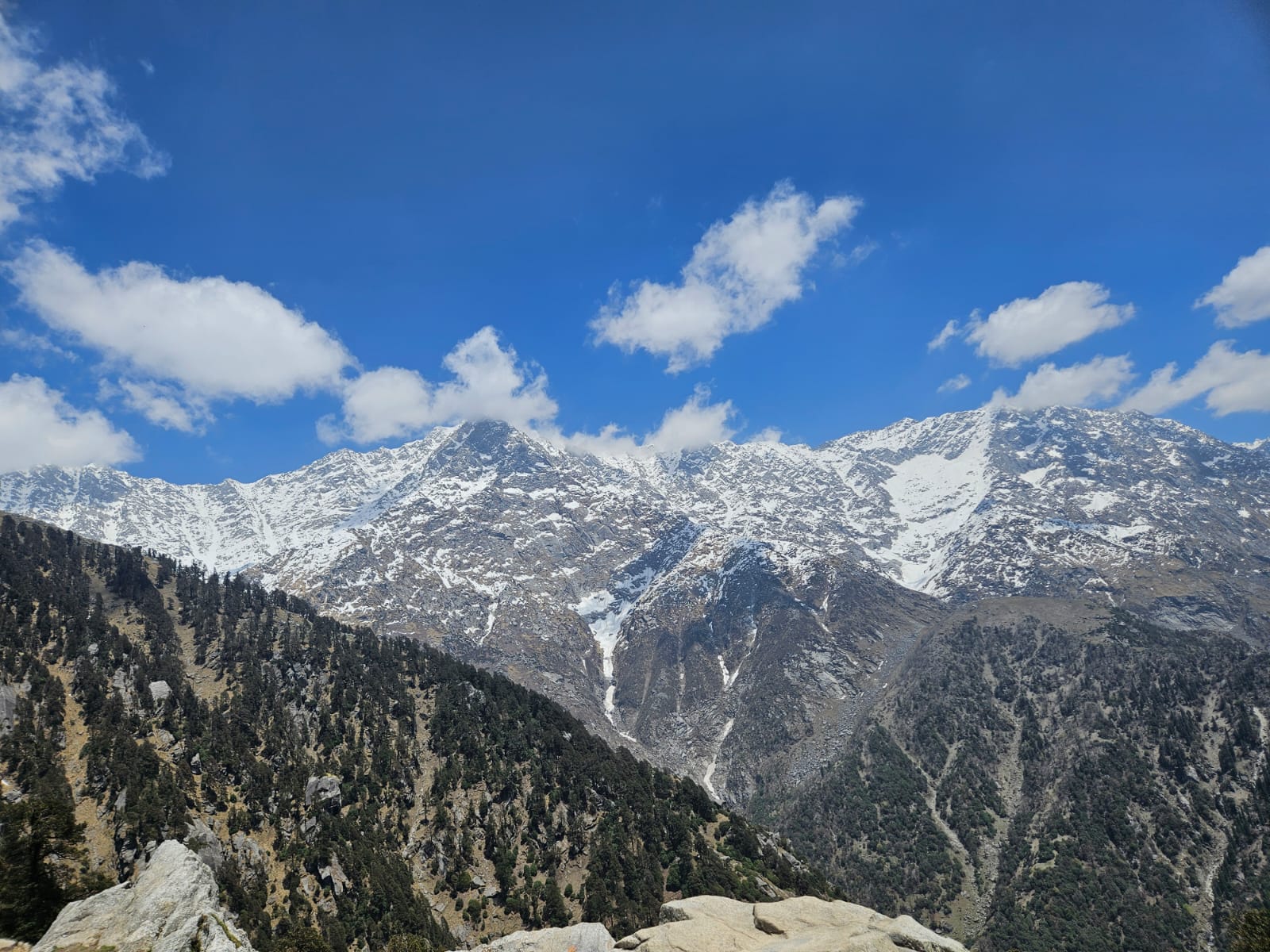
Situated at a distance of 55 km from Kausani and 25 km from Dwarahat, Babaji Cave(Gufa) is on the Dunagiri mountain, at a height of 6500-8500ft. The last motorable town before the trek is Kukuchina. On a rainy June morning, we set out to Babaji cave, hoping that the rain would stop and not ruin our trek.
The drive from Kausani to Kukuchina was about 1.5 hours long. We stopped at “Joshi Guest House”, had a cup of tea and requested them to prepare lunch in advance for us after we returned from the trek. After 10-15 min we reached the base of the trek. With our trekking sticks handy and a slow peeping sunshine clearing the downcast sky, we started our climb.

The trek is about 2-3km long, through a moderately dense forest. The last chunk of this trek is extremely steep and I would suggest to visit this place either in the summer or winter, as the path gets slippery in monsoon. Just a few steps below the cave, YSS has a Satsangh Kuteer. It is a small meditation hall with images and quotes from the Gurus of YSS.

The cave is cool and damp. Generally, you will see YSS disciples meditating for hours in the cave and some chanting. We went in and meditated for a while. It was a splendid experience!
During the summers(1st March to 30th September), the cave is open from 9am to 4pm and 10am to 3.30pm during winters(1st October to 28th February).

While returning, the clear Himalayan sky became cloudy yet again and it started to drizzle lightly. This cave is also popular with Tamilians as it is said that Superstar Rajinikant frequently visits for his spiritual sadhana.
After having a satvik hearty meal in the Joshi guest house, we proceeded to explore Dwarahat.
Dwarahat:
The town of Dwarahat was once the capital of Katyuri Dynasty, before they moved it to Almora.

Dwarahat means, “Way to Heaven” and it houses 55+ ancient temples, built around 11th-century. It is now restored and maintained by ASI. The temples are present in every nook and corner, sometimes hidden behind houses and shops. This ancient temple town is very similar to Hampi, but it is left forgotten. There isn’t a map unifying or even describing the topography of the town. One has to follow the billboards and reach the temple. Since there are plenty of temple complexes, it is easy to get lost in the lanes, wondering about the history. We were lucky to be guided by the locals.

Unfortunately, barring a few, most temple complexes aren’t well maintained, closed to the public and more often than not, do not possess any board describing the historical significance of that place. We could cover only 5 such temples in our limited time frame, these were: Mrityunjaya, Badrinath, Gujjardeo, Ratandeo and the Kacheri group of temples. With a little maintenance and awareness like Hampi, Dwarahat too could become the centre of tourism for history and architecture aficionados in Uttarakhand.

Yogoda Satsangh Society(YSS) Ashram:
We also paid a visit to the YSS ashram. It is a serene establishment, home to many disciples. Since we reached beyond visiting hours, we didn’t get a chance to explore the ashram but we could dwell in YSS’s literature and publications.

Autobiography of a Yogi:
One of the most popular book in spiritual literature is Autobiography of a Yogi by Paramahansa Yogananda. I was in my late teens when I first read it and I was mind blown! The book is the personal journey of Yogananda from being a spiritual seeker to becoming a spiritual guide while spreading the knowledge of Kriya Yoga all over the world.

A lot of the book consists of deep spiritual experiences, expression of Sidhis, the manifestation of miracles and an emphasis on the power of thought. As a young practitioner of spirituality, the book appeals to the clueless, confused person within each one of us. Yogananda doesn’t portray himself as an enlightened being. In that lies the beauty of the book!
You get to see how the spiritual guides are themselves human at the end of the day. They undergo years of practice and slowly move from confusion to clarity. This marks the reason for their enlightenment.
Uttarakhand has some of the most mystical and spiritually enriched caves such as Patal Bhuvaneshwar, Patal Devi, Vashisht Gufa and more. It is a seat of spirituality and I hope you too have such an enriched experience, the next time you visit Dev Bhoomi!


Leave a Reply