

The sun shines brightly and the warm rays reaches your window sill. You hear street hawkers zoom through the crooked streets of Almora, getting their shops ready for a buzzing sale of Bal Mithai (native chocolate fudge)and Singori (milk sweet). The crisp sunshine and the nip in the air only encourages you to get ready and explore the streets of Almora!

This was exactly how I felt when I woke up to a bright morning in Almora in early April. Situated in the Kumaon region of Uttarakhand, Almora was the erstwhile capital of the Katyuri Dynasty in the 15th century. The proximity to other popular tourist destinations (such as Binsar, Dwarahat and Jageshwardham) and a rich history immersed with the spiritual aura of the land makes it an unmissable destination!

Patal Devi:
The most surprising aspect of visiting this temple was that it wasn’t in our itinerary. While driving towards Kasar Devi, the gateway to Patal Devi caught our eye! The arched gate, intriguing name and picturesque view tapped into our curiosity and compelled us to visit this temple. It is believed that Swami Vivekananda and his disciples meditated here and stayed in the rest house nearby.

The temple can be rightly described as a spiritual zone in the middle of nowhere. Patal Mata, a Swayambhu Shakti Pitha was the Kul devi (Goddess of the land) of the Katyuri Kingdom. The sanctum sanctorum is a cave with carved figurines of Ganpati and Shiv Shakti and is said to have an underground pathway to Patal Bhuvaneshwar. While meditating here, I felt as if I was one with the Earth.

Kasar Devi:
Kasar Devi is a very popular tourist and religious attraction. According to NASA, this temple is positioned on the earth’s Van Allen Belt. The region surrounding the Kasar Devi Temple is a powerful electromagnetic field of immense positive energy created by the Cosmic Rays and Solar Wind similar to that of Stonehenge in England and Machu Picchu in Peru.

According to Hindu scriptures such as the Shiva Mahapuranam and Devi Mahatmaya, it was at this very spot that Goddess Durga defeated the tyrannical Asura brothers, Shumbha and Nishumbha, in a fierce and deadly war.

The duo had been granted a boon that any man or animal could not slay them. This led them to assume that no woman could defeat them, which only fueled their arrogance and inflated their egos. Their unchecked hunger for power and dominance triggered a conflict, culminating in a devastating war between the Devas and Asuras.

In the heat of battle, the Asuras unleashed Raktabija, a formidable demon blessed with a boon that made him nearly invincible, every drop of his blood that touched the ground would give rise to a new Raktabij. However, Goddess Durga countered this threat by deploying Kali, her fierce manifestation, who consumed Raktabija‘s blood before it could touch the earth, preventing his regeneration. Ultimately, Goddess Durga destroyed the Asuras, ending their tyranny and restoring peace to the universe after a harrowing and gory battle.

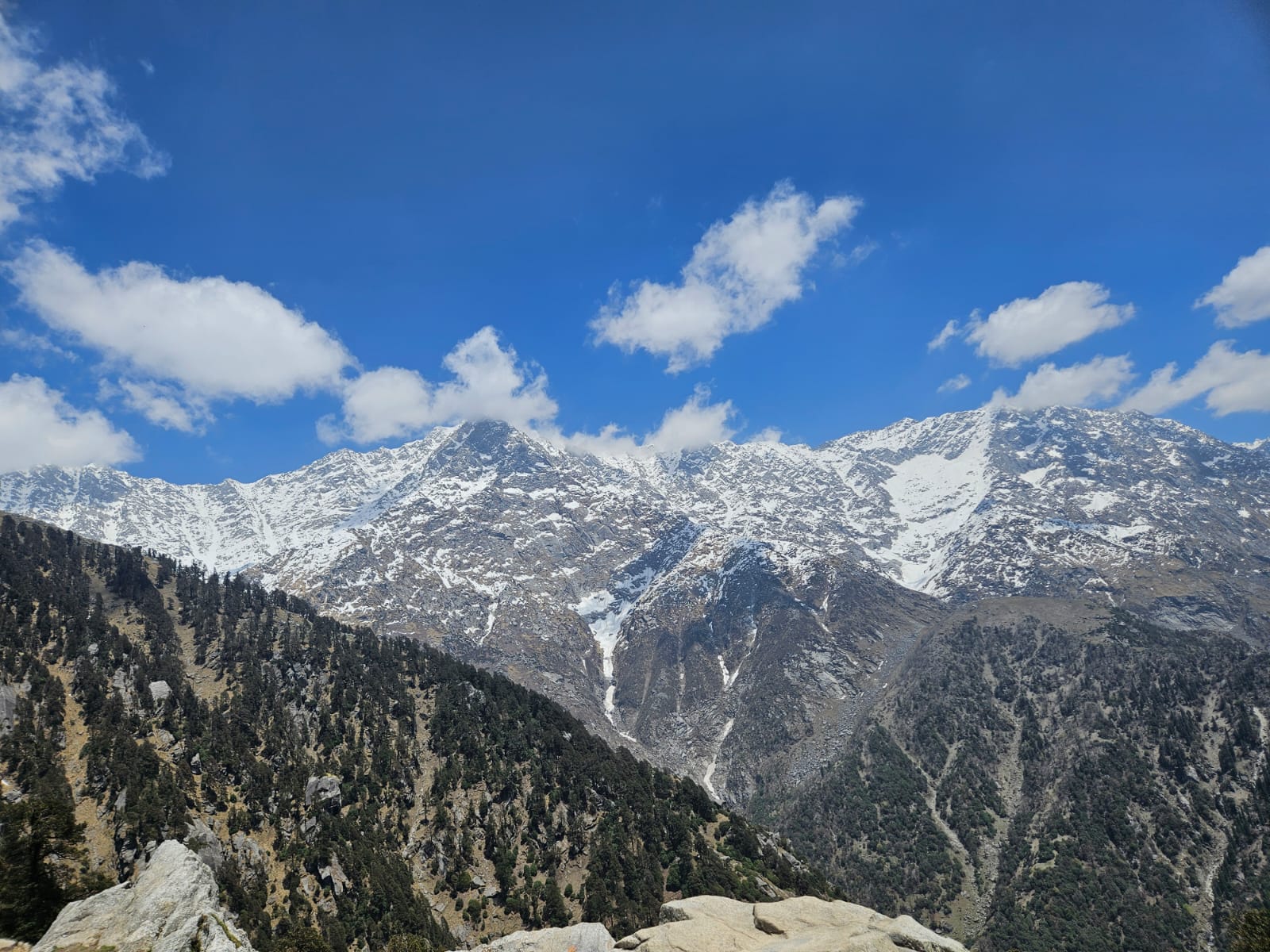
Due to all of these reasons, Kasar Devi has attracted sages and mystics through the ages and one can feel and experience the positive energy and serenity, even today!It was an impromptu plan to follow the 1.5km trekking trail to the temple. The trail is a magical walk across the hill filled with coniferous trees, shrubs and glistening soil. The view from the hilltop reminded me of the picture-perfect meadows shown in animated movies.

The temple is built around a cave. In the garbagriha (innermost sanctum), one can see the natural image of Goddess Durga behind the established murti (idol).

Further ahead of the temple lies the Mahadev Mandir and Swami Vivekananda Dhyaan Kendra – the very spot where Swami Vivekananda is said to have meditated in 1890. The stillness was resonating in the atmosphere such that everyone gathered there sat down to meditate.

Chitai Golu Devta Mandir:
Once upon a time, there was a king named Raja Haalrai and he yearned for a child. After a series of mystical occurrences, the 8th wife of the King gave birth to a boy who was the manifestation of Bhairav (a form of Lord Shiva). When the other seven wives were unsuccessful in conspiring to kill the child, they sent him down the river in a basket. Adopted by a fisherman, the child decided to fight for justice for his mother. On his wooden horse he went back to the kingdom and reminded the King of his mistakes.

After this incident, the people of Chitai, Champavat and Ghodakhal worship him as Golu Devta, the deity of justice. Even today, the deity is worshipped in the form of a child mounted on a wooden play horse. This is one of the folklore of Chitai Golu devta and the tales about his birth differ from place to place.

As soon as I entered the temple, I was captivated by the presence of so many bells around me! They were ringing in complete symphony with each other. Every corner of this enchanted temple is adorned with bells and letters of prayer. Faith resonates from every nook and cranny of this temple.

People from far-flung regions come to this temple to seek justice in legal issues. One can purchase bells and paper from the vendors outside the temple and tie up their written prayer along with the bell in various parts of the temple. It is one of the most unique temples that I have ever visited. I sat there listening to the reverberating sound of bells while being immersed in faith and devotion.

Lakhudiyar:
Lakhudiyar literally means “one lakh caves”. These are rock shelters from the Neolithic era, spread all over Almora. The paintings on the walls include geometric shapes, animal and human figurines, painted with fingers in black, red and white. ASI has permitted only one of these rock shelters for tourist visits.

In history, we are taught about cave paintings, but I never thought that I would get an opportunity to view such ancient cave paintings! The paintings are in pristine condition and the color has hardly faded. It seems as if it was painted just yesterday!

The Streets of Almora:
The streets of Almora add to the untouched beauty of this region. They are narrow, winding and are connected to one another by a complex network of stairways. It is indeed an explorer’s paradise as the long endless streets lead you to some part of lost history, but it is better to follow a guide, lest you lose your way in the convoluted streets.

You can walk across town, feast on the wide array of local sweets such as baal mithai, visit the Nanda Devi Mandir, Budden Memorial Methodist Church and shops in the local bazaar. This beautiful walk will help you to acclimatize to the high altitude (5387 feet) of Almora and prepare you for arduous mountainous treks.

Satkhol Himalayan Ashram:
Instituted by Heartfulness Meditation, Satkhol Himalayan Ashram is a serene retreat nestled just 32 km from Almora, offering an ideal escape to unwind, meditate, practice yoga, and connect with your inner self. The ashram provides breathtaking views of the majestic Om Parvat, Nanda Devi, and Trishul mountain ranges, adding to the sense of tranquility.

Surrounded by lush greenery, vibrant flowers, and the pristine beauty of the Himalayas, Satkhol truly embodies the essence of its name—“unfolding of truth”. The natural beauty of the environment, combined with the atmosphere of peacefulness, makes it an unparalleled destination for reflection and spiritual awakening, bringing a peaceful and profound ending to the Almora experience.

If you plan on visiting Almora in the near future, make sure you visit Katarmal Surya Mandir, Binsar, Dwarahat, Jageshwardham, Patal Bhuvaneshwar and Munsiyari.



Leave a Reply